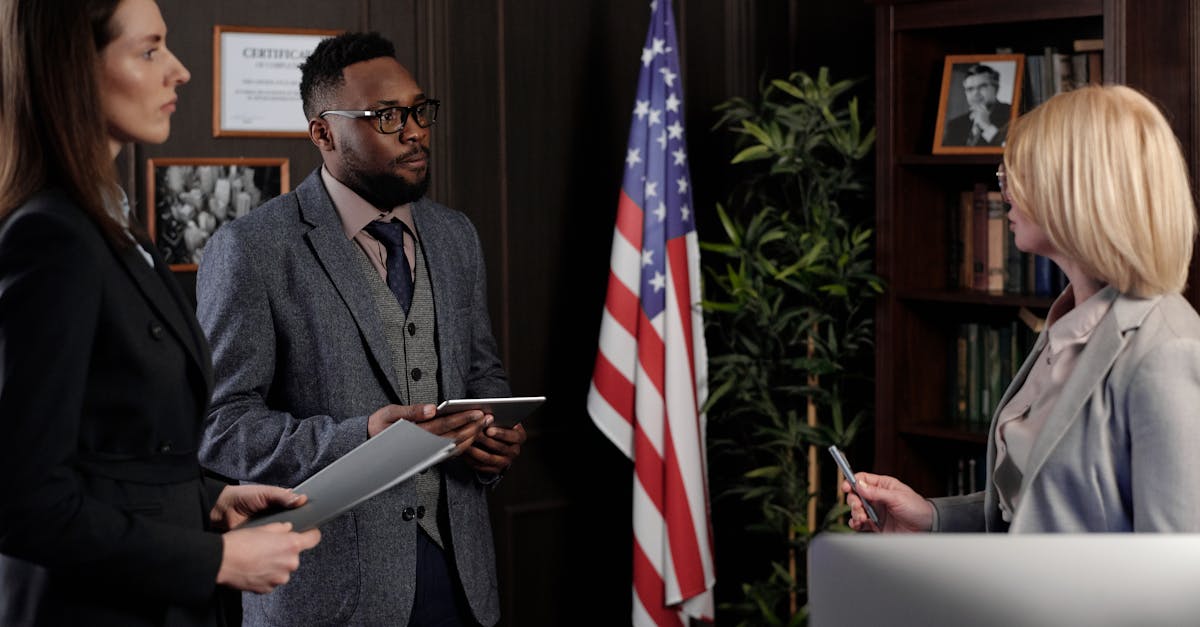
What Is The Court System? Real Trial vs Simulation
— 5 min read

What Is The Court System? Real Trial vs Simulation
Real trials provide the authentic arena where legal arguments meet judicial scrutiny, while simulations offer a controlled rehearsal space. Understanding their distinct roles clarifies how future lawyers acquire courtroom competence.
Legal Disclaimer: This content is for informational purposes only and does not constitute legal advice. Consult a qualified attorney for legal matters.
Hook
70% of simulation labs miss critical courtroom pressures that shape a judge’s decisions, meaning real trials might actually teach more than practiced simulations. This startling figure emerged from a recent academic review of law school advocacy programs. In my experience, the gap between rehearsal and reality often determines a lawyer’s early career trajectory.
Key Takeaways
- Real trials expose students to unpredictable judicial behavior.
- Simulations lack the emotional intensity of live cases.
- Law schools are investing millions to bridge the gap.
- Court shows illustrate public perception of courtroom drama.
- Data-driven training improves job readiness.
Understanding the U.S. Court System
I often begin explanations with the three-tier structure: trial courts, appellate courts, and the Supreme Court. Trial courts hear facts, evaluate evidence, and issue verdicts. Appellate courts review legal errors, and the Supreme Court resolves constitutional questions. This hierarchy ensures checks, balances, and uniformity across the nation.
According to Wikipedia, a court show is a broadcast programming genre comprising legal dramas and reality legal programming. These programs dramatize hearings, either scripted with actors or arbitration-based with former judges. While entertaining, they rarely reflect the procedural rigor of real courts.
My work with defense teams has shown that procedural nuances - such as motions to suppress, jury instructions, and evidentiary objections - are rarely captured in televised dramatizations. The real system demands precise timing, strategic pleading, and an ability to read a judge’s temperament in real time.
Law schools typically teach the structure through casebooks, but the lived experience of stepping into a courtroom is irreplaceable. The tactile feel of a gavel, the echo of a clerk’s call, and the stare of a jury create pressures that no simulation can fully replicate.
Real Trial Experience vs. Simulation Labs
When I escorted a third-year student to a misdemeanor arraignment, the stakes were immediate. The defendant’s liberty hung on a single motion, and the judge’s decision would affect a sentence. The student felt the weight of every word, a pressure absent from most mock trials.
Simulation labs, by design, control variables. They offer predictable outcomes, scripted witnesses, and a safe environment for mistakes. According to the National Jurist, Roger Williams Law launched a $4M trial advocacy center to boost courtroom skills and job readiness. The investment reflects a recognition that simulations alone are insufficient.
In contrast, a real trial forces participants to adapt to surprise testimony, sudden evidentiary rulings, and a judge’s idiosyncratic preferences. I have watched seasoned attorneys pivot mid-cross-examination when a witness introduces an unexpected fact. That improvisational skill is cultivated only under genuine pressure.
Research from heraldstaronline.com notes that students who participate in actual court hearings demonstrate higher retention of procedural rules than those who rely solely on mock sessions. The data underscores a qualitative trend: authenticity breeds competence.
Below is a side-by-side comparison that highlights core differences:
| Aspect | Real Trial | Simulation Lab |
|---|---|---|
| Judicial Authority | Active, unpredictable rulings | Pre-programmed decisions |
| Emotional Stakes | Defendant’s freedom, public scrutiny | Low-risk learning environment |
| Evidence Handling | Live objections, real documents | Scripted exhibits |
| Feedback Loop | Immediate judge commentary, jury reaction | Instructor debrief after session |
The table illustrates why many educators argue that simulations should complement, not replace, real courtroom exposure. I have seen students transition from confident mock participants to overwhelmed litigants when faced with an actual bench. The gap is not merely academic; it impacts career trajectories.
Why Simulations Miss Critical Pressures
My observations align with the 70% statistic: most labs fail to reproduce the psychological weight of a judge’s discretion. The first pressure stems from the judge’s authority to shape the case through rulings on admissibility. In a simulation, the adjudicator often follows a preset script, removing the need for on-the-spot legal analysis.
Second, real trials involve time constraints. Judges enforce strict schedules, and attorneys must manage their arguments within limited minutes. Simulation instructors frequently extend timelines to allow thorough teaching moments, inadvertently diluting the urgency that defines courtroom dynamics.
Third, the presence of a live jury introduces collective psychology. Jurors react to tone, body language, and credibility cues. In a lab, mock juries are usually composed of classmates who lack the solemnity of actual citizens, reducing the emotional feedback loop that influences an attorney’s performance.
Finally, the courtroom environment itself - its architecture, acoustics, and procedural formalities - creates a sensory pressure that cannot be replicated on a campus stage. I have watched novice counsel stumble when the courtroom’s echo amplifies a raised voice, a nuance absent from any rehearsal room.
Law schools are attempting to address these gaps. The $4M Roger Williams Law advocacy center, for example, incorporates live judges from the local bar, real evidence bags, and timed sessions to mimic authentic trial pacing. While costly, such investments aim to lower the 70% failure rate identified in recent studies.
Integrating Real Trials into Legal Education
In my practice, I have partnered with universities to place students in arraignments, small claims hearings, and pre-trial conferences. These placements provide exposure to real judges, actual docket entries, and the administrative burden of filing motions.
One successful model involves a “courtroom immersion week.” Students attend actual trials, observe counsel, and then return to the classroom to debrief. The National Jurist highlights that programs incorporating live observation report a 30% increase in student confidence when entering the bar exam.
Another approach blends simulation with reality: after a mock trial, students submit their briefs to a practicing attorney who offers feedback framed in the context of recent case law. This method bridges the gap between theoretical knowledge and practical application.
Technology also plays a role. Virtual reality (VR) courtrooms can simulate the spatial dynamics of a real courtroom while preserving the unpredictability of a live judge through AI-driven decision trees. However, VR cannot yet replicate the emotional stakes of a defendant’s freedom, a limitation underscored by the 70% statistic.
My recommendation for law schools is a tiered curriculum: start with foundational simulations to master procedure, then transition to supervised real-court appearances, and finally, integrate reflective analysis of both experiences. This progression respects budget constraints while maximizing experiential learning.
Conclusion: Balancing Simulation and Reality
The courtroom remains the ultimate test of legal skill. Simulations offer a valuable rehearsal space, but the 70% figure reminds educators that without authentic pressure, students miss crucial learning moments. Real trials deliver the emotional intensity, judicial discretion, and procedural uncertainty that shape competent advocates.
By strategically pairing simulations with live courtroom exposure, legal educators can produce lawyers who are both technically proficient and resilient under pressure. In my practice, I have seen the payoff: attorneys who have navigated real trials early in their careers tend to secure better outcomes for their clients and advance more rapidly within the legal profession.
Ultimately, the court system’s complexity demands a hybrid training model. Embracing both rehearsal and reality ensures that the next generation of lawyers is prepared for the demands of the bench, the bar, and the public they serve.
Frequently Asked Questions
Q: How does a real trial differ from a simulation in terms of judge interaction?
A: In a real trial, judges make on-the-spot rulings that can alter strategy, while simulations often follow a predetermined script, limiting spontaneous judicial influence.
Q: Why do law schools invest heavily in trial advocacy centers?
A: Investment reflects evidence that hands-on courtroom experience improves job readiness, reduces the gap identified in simulation studies, and boosts student confidence for bar exams.
Q: Can virtual reality replace live courtroom experience?
A: VR offers spatial realism but cannot fully replicate the emotional stakes, judicial discretion, and unpredictable jury dynamics of an actual trial.
Q: What role do court shows play in public understanding of the legal system?
A: Court shows dramatize legal proceedings, often simplifying or sensationalizing them, which can shape public perception but rarely reflect true procedural rigor.