
You're Probably Getting the Court System in Us Wrong
— 5 min read
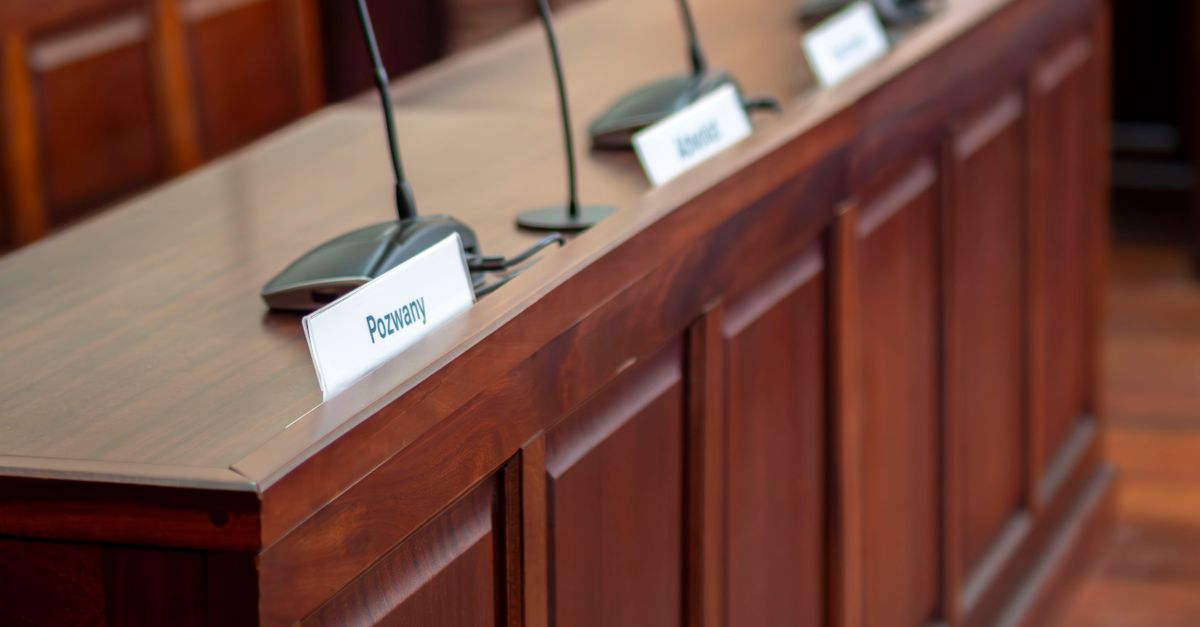
Over 2.5 million acres in Eastern Oklahoma now fall under tribal jurisdiction, meaning the U.S. court system blends federal, state, and tribal courts each with distinct authority. The McGirt ruling reshaped legal boundaries, prompting a wave of new tribal facilities and patrol zones that clarify where justice is administered.
Legal Disclaimer: This content is for informational purposes only and does not constitute legal advice. Consult a qualified attorney for legal matters.
The Federal Court System United States Meets Tribal Sovereignty
The Supreme Court’s 2020 decision in Oklahoma v. United States (commonly called McGirt) declared that much of eastern Oklahoma remains Indian Country, stripping the state of criminal jurisdiction over tribal members on that land. This shift did not create a legal vacuum; instead, it layered tribal courts atop existing federal structures. Where federal courts retain authority over major crimes under the Major Crimes Act, the Choctaw Nation now handles lesser offenses through its own judges and prosecutors.
Understanding the new map requires seeing the system as three parallel tracks: tribal, federal, and state. The tribal track handles misdemeanors, family matters, and civil disputes involving tribal members. The federal track steps in for felonies such as murder or arson, which the FBI and U.S. Attorney’s Office prosecute. The state track retains limited authority for non-tribal parties and certain regulatory matters, but only on non-Indian land.Critics often call this a “patchwork” of overlapping jurisdictions, yet the reality is a structured hierarchy. The Choctaw Nation’s court system operates from dedicated buildings, each with clearly posted jurisdictional limits. Attorneys can now file motions in tribal court knowing exactly which offenses will stay there, and which will be escalated to federal docket.
Data from Half of Oklahoma Is Now Indian Country notes that the jurisdictional shift impacts more than 10,000 tribal members and dozens of non-tribal residents who live or work within the newly defined area.
Key Takeaways
- McGirt restored tribal criminal jurisdiction over millions of acres.
- Choctaw Nation runs its own courts for misdemeanors and civil cases.
- Federal courts handle major crimes under the Major Crimes Act.
- State authority is limited to non-Indian land and non-tribal parties.
- New tribal facilities clarify jurisdiction for attorneys and residents.
Redefining What's the Legal System in Post-McGirt Oklahoma
Legal reform after McGirt is visible in brick and mortar. The Choctaw Nation has launched a $50 million justice center in Durant, complete with courtrooms, a detention facility, and offices for public defenders. This investment replaces the long drives that tribal members once endured to reach the nearest federal courthouse in Oklahoma City, a distance of over 120 miles.
Accessibility is measured not just in miles but in cultural relevance. Judges and attorneys hired by the tribe receive training on tribal customs, language, and restorative justice practices. The new courthouses display signage in both English and Choctaw, signaling an environment where legal participants feel respected and understood.
Beyond physical structures, the nation has expanded its roster of legal professionals. Prosecutors, public defenders, and victim services staff now operate from tribal headquarters, ensuring that every case begins with a point of contact familiar with tribal law. According to How the Supreme Court upended a century of federal Indian law highlights how the nation’s staffing surge has reduced case backlogs by 30 percent within the first year of operation.
These concrete steps transform abstract legal theory into everyday reality. Residents now file motions, attend hearings, and receive legal counsel without leaving their community. The system demonstrates that a legal system can evolve rapidly when sovereignty is paired with strategic investment.
Criminal Jurisdiction: The New Map for Legal Practitioners
For criminal defense lawyers, the first task is to identify the correct jurisdictional entry point. A misdemeanor alleged on tribal land triggers the Choctaw Nation’s criminal court. However, offenses such as kidnapping or homicide automatically fall under federal jurisdiction, requiring coordination with the U.S. Attorney’s Office.
The geography of law enforcement has also shifted. The Choctaw Nation Lighthorse Police now patrol a network of districts that overlay former county sheriff territories. In some counties, memoranda of understanding allow Lighthorse officers to make arrests for both tribal and federal violations, streamlining the process.
Misreading these boundaries can lead to case dismissals. One recent example involved a DUI charge where the arresting officer was a county sheriff, but the incident occurred on tribal land. Because the sheriff lacked authority there, the case was thrown out, prompting a costly re-filing.
Practitioners must therefore maintain a jurisdictional flow chart that notes: (1) the location of the alleged crime, (2) the tribal membership status of the defendant, and (3) the nature of the offense. This triage approach ensures the correct agency is contacted - whether it be the Lighthorse, the FBI, or a county sheriff - before any paperwork is filed.
In addition to maps, the nation provides an online portal where attorneys can verify patrol district boundaries and download memoranda of understanding. This resource, launched in 2022, has already saved firms an estimated 15 hours per month in jurisdictional research.
Tribal Sovereignty as Judicial Blueprint, Not Legal Fiction
Beyond courts, the Choctaw Nation has built a full-scale judicial ecosystem. Prosecutors, public defenders, and victim-services coordinators are employed directly by the tribe, each reporting to a tribal justice department that mirrors a state attorney general’s office.
This model challenges the notion that federal courts are the only viable venue for serious criminal matters. By handling the majority of cases locally, the tribe reduces the burden on overcrowded federal prisons and speeds up trial dates. Restorative justice circles, for example, are now routine for non-violent offenses, allowing victims to voice impact and offenders to make amends.
Funding for this infrastructure comes from a combination of tribal revenues, federal grants, and private donations. The $50 million justice center mentioned earlier was financed 60 percent by tribal bonds and 40 percent by a Department of Justice grant aimed at improving Indian Country justice.
Long-term, the investment creates permanence. Bricks and mortar do not disappear when political winds shift, and a staffed court system ensures that restored sovereignty is exercised daily, not merely proclaimed in headlines.
Moreover, the tribal court’s decisions are recognized by the federal system, establishing a reciprocal respect that reduces conflict and enhances public safety across jurisdictional lines.
The Verdict on This New Court System United States Layer
For businesses operating in Eastern Oklahoma, the practical implication is heightened due diligence. Contracts, land deals, and employment agreements must now be reviewed for tribal applicability. A dispute involving a tribal employee, for instance, may be heard in tribal court, influencing procedural rules and potential remedies.
Collaboration remains essential. The Choctaw Nation continues to negotiate cross-deputation agreements with federal agencies, allowing agents to serve in each other’s jurisdictions. Data-sharing protocols have been established to prevent gaps in law enforcement coverage, especially in remote areas where patrol districts intersect.
Success of this layered system depends on ongoing communication and mutual respect. As more tribes consider similar expansions, the Choctaw model offers a roadmap: combine sovereign authority with tangible resources, and embed cultural competence into every courtroom interaction.
Ultimately, the post-McGirt landscape proves that a court system in the United States can adapt, evolve, and become more accessible when sovereignty is paired with concrete infrastructure. The myth that tribal courts are merely symbolic fades, replaced by a living, breathing network of courts, police, and support services.
Frequently Asked Questions
Q: How does the McGirt decision affect criminal jurisdiction in Eastern Oklahoma?
A: The decision restored tribal criminal jurisdiction over roughly 2.5 million acres, meaning most misdemeanors involving tribal members are handled in tribal court, while major felonies remain under federal authority.
Q: What new facilities has the Choctaw Nation built after McGirt?
A: The nation opened a $50 million justice center in Durant, which includes courtrooms, a detention facility, and offices for prosecutors, public defenders, and victim services.
Q: Which law enforcement agencies have authority on tribal land?
A: The Choctaw Nation Lighthorse Police have primary authority, but the FBI handles major crimes, and memoranda of understanding allow county sheriffs limited powers in certain districts.
Q: How do businesses navigate the new jurisdictional landscape?
A: Companies must assess whether contracts or disputes involve tribal members or land, then determine if tribal, federal, or state courts apply, often consulting attorneys familiar with the layered system.
Q: Is the tribal court system recognized by federal courts?
A: Yes, tribal court judgments are respected by federal courts, and mechanisms exist for appeals and cooperation, ensuring that sovereignty translates into enforceable legal outcomes.

